Loading...
Serving Dedham, MA and surrounding areas. (781) 410-0722
Dedham Concrete is a concrete contractor serving Quincy, MA with foundation installation, concrete driveways, retaining walls, and slab work. We understand Quincy's dense lots, older housing stock, and freeze-thaw winters - and we have served the Greater Boston south shore since 2020.
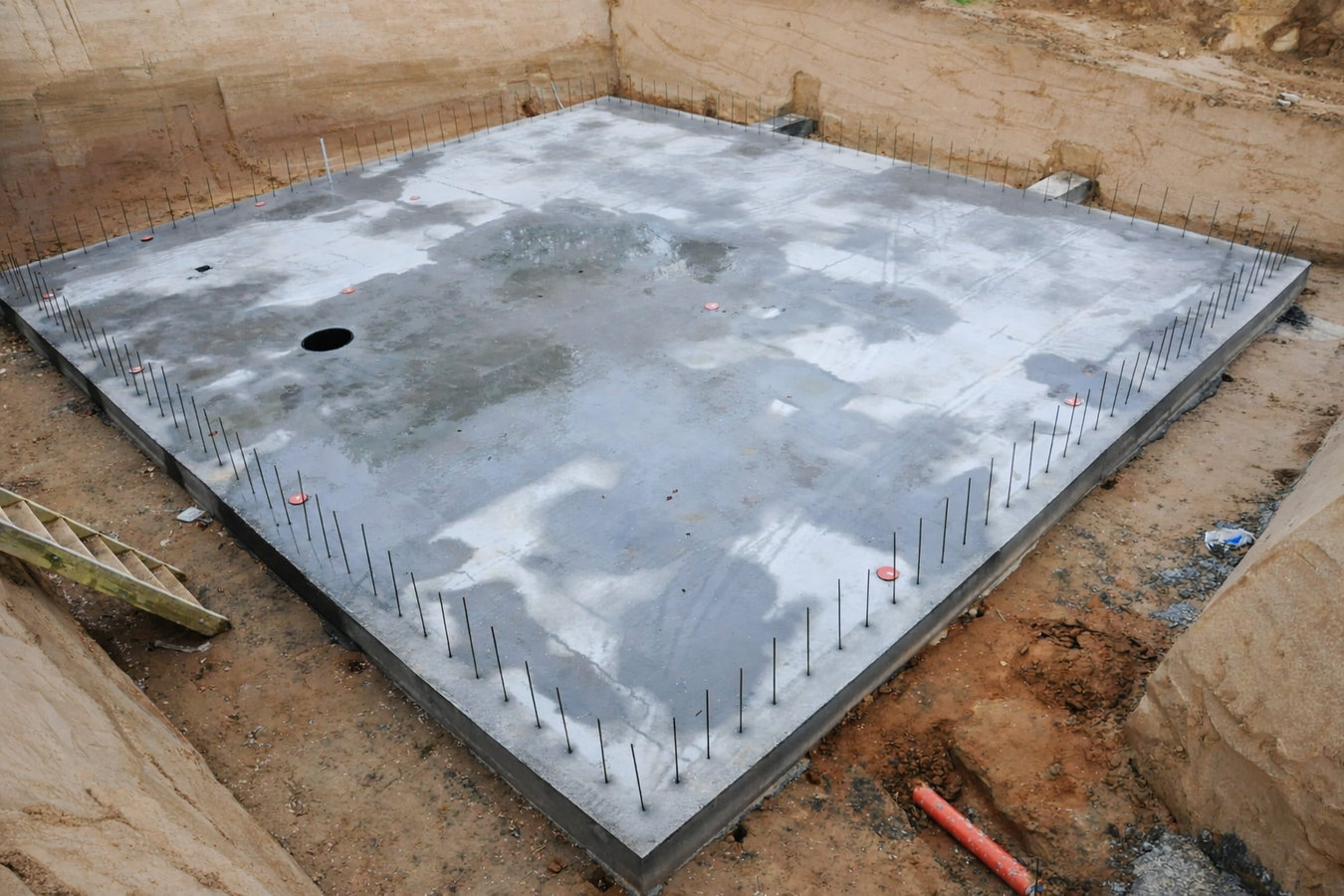
Quincy has a large share of pre-1960 homes - many of them in Quincy Point, South Quincy, and Germantown - where the original foundations were poured with materials and methods that do not meet today's standards. A proper foundation replacement in Quincy has to account for the 48-inch Massachusetts frost depth and the saturated soils common near Quincy Bay. See the full scope of our foundation installation work and what to expect from start to finish.
Quincy's older, streetcar-era neighborhoods have small lots with shared or narrow driveways that have been repaired and repaired until repair is no longer the right answer. A new concrete driveway on a tight Quincy lot requires careful planning for equipment access, material delivery, and compacted base work in a confined space - all of which we handle regularly in this city.
Grade changes are common on Quincy's hilly residential lots, and older landscape timbers or stacked stone walls fail quickly in this coastal climate. Concrete retaining walls handle the combination of saturated soil, frost heave, and coastal wind exposure that wooden structures simply cannot survive over the long term.
Many of Quincy's two- and three-family homes still have the original precast or wooden stoops from decades past. These deteriorate faster in a coastal climate - salt air degrades masonry and wood simultaneously. Poured-in-place concrete steps, properly connected to the foundation, are the only permanent fix.
Additions and detached garages in Quincy need slab foundations built to handle both the local frost depth and the clay-heavy, water-retaining soils near the waterfront. A slab poured without adequate gravel drainage beneath it will heave and crack within a few winters in this environment.
Quincy's density means sidewalks see heavy foot traffic year-round, and the City of Quincy holds homeowners responsible for the public sidewalk in front of their property. A cracked or sunken sidewalk panel is a liability - replacing it with properly reinforced concrete stops the problem before someone trips and you get a claim.
Quincy is one of the densest cities in Massachusetts, and that density creates a specific set of challenges for concrete work. Lots are small, side yards are often only a few feet wide, and shared driveways are common in neighborhoods that were developed as streetcar suburbs in the early 1900s. Getting a concrete mixer and excavation equipment to the back of a Quincy property requires planning that contractors who only work in suburban towns do not have. At the same time, Quincy winters are genuine Boston winters - close to 48 inches of snow per year, with freeze-thaw cycles hitting any surface that was not built with the right base and mix.
A large share of Quincy's housing stock predates 1960, and many of those homes near Boston Harbor and Quincy Bay sit on fill or saturated soil that shifts with the seasons. Salt air from the coastline accelerates concrete degradation faster than you see in inland towns. Homes near Wollaston Beach and Germantown take on more wind, more salt, and more storm surge exposure than the city average. Foundation work in particular needs to account for the 48-inch Massachusetts frost depth and the possibility of underground surprises - old fill, utility lines, and soil conditions that differ from what you see on the surface. The City of Presidents has real complexity beneath its streets, and a contractor who has worked here knows that.
Our crew works throughout Quincy regularly, and we understand the local conditions that affect concrete contractor work here. Quincy Inspectional Services handles permitting for most structural concrete and foundation work, and we coordinate with that office on every permitted project so timelines do not slip due to paperwork.
Quincy is a city with real geographic variation. Neighborhoods near Quincy Center and North Quincy, close to the Red Line stations, have denser lots and older construction than the quieter residential streets in West Quincy and along the Quincy-Braintree border. Down near Wollaston Beach and Quincy Point, we see older triple-deckers and smaller single-family homes that face salt air and storm exposure from Quincy Bay. We factor the specific location into every quote we give, because a job near the water involves different material and base prep decisions than one inland.
Quincy borders several towns we serve regularly. We work across the line into Randolph to the southwest and into Milton to the northwest - so if you have neighbors or family in those towns who also need concrete work, we can help them too.
Contact us by phone or through our online form. We respond to all Quincy inquiries within one business day and schedule an on-site visit at a time that works around your schedule.
We visit your Quincy property, assess access for equipment given your lot size, review the soil and drainage conditions, and give you a written quote with itemized costs. There are no surprises added later - what you see on the quote is what you pay.
For permitted work, we file with Quincy Inspectional Services and coordinate the inspection schedule. You do not need to be present for the daily work, but we keep you informed at every stage so you always know where the project stands.
We complete the work, walk you through the finished project, and leave the site clean. For concrete pours, we provide curing guidance in writing so you know when the surface is ready for foot traffic and vehicles.
We serve all of Quincy - from Quincy Center and North Quincy to Wollaston Beach and South Quincy. Call or submit a form and we will get back to you within one business day.
Quincy is a city of about 101,000 people sitting directly south of Boston on the shores of Boston Harbor. It is one of the most densely populated cities in Massachusetts, with neighborhoods that range from the walkable urban core near Quincy Center and North Quincy to quieter waterfront streets near Wollaston Beach and Quincy Point. A large share of the housing stock was built before 1960 - two- and three-family homes dominate the older streetcar-era neighborhoods, while newer condos and apartment buildings have gone up near the Red Line stations in recent years. The city calls itself the "City of Presidents" in honor of Presidents John Adams and John Quincy Adams, both born here, and Adams National Historical Park in Quincy Center draws visitors from across New England.
Homeowners in Quincy own property in one of Greater Boston's more complex building environments - dense lots, coastal soil conditions, and a housing stock that spans over a century of construction methods. The communities just outside Quincy have similar character. We also serve homeowners in Randolph to the southwest, where the residential neighborhoods share many of the same mid-century housing types, and in Canton further south along Route 138.
Durable concrete driveways built to last through harsh New England winters.
Learn MoreBeautiful concrete patios that extend your outdoor living space year-round.
Learn MoreDecorative stamped patterns that add style and texture to any surface.
Learn MoreSafe, code-compliant sidewalks installed with precision and care.
Learn MoreCustom finishes and colors that transform plain concrete into a showpiece.
Learn MoreStructurally sound retaining walls that manage erosion and grade changes.
Learn MoreLevel, finished concrete floors for residential and commercial interiors.
Learn MoreSolid concrete steps crafted for safety, durability, and great curb appeal.
Learn MoreReliable slab foundations engineered for residential and commercial builds.
Learn MoreComplete foundation installation services from excavation through pour.
Learn MoreLong-lasting concrete parking lots designed for heavy commercial use.
Learn MoreConcrete work in Quincy takes planning - the sooner you call, the sooner we can fit your project into the schedule before the next freeze season arrives.