
Loading...
Serving Dedham, MA and surrounding areas. (781) 410-0722
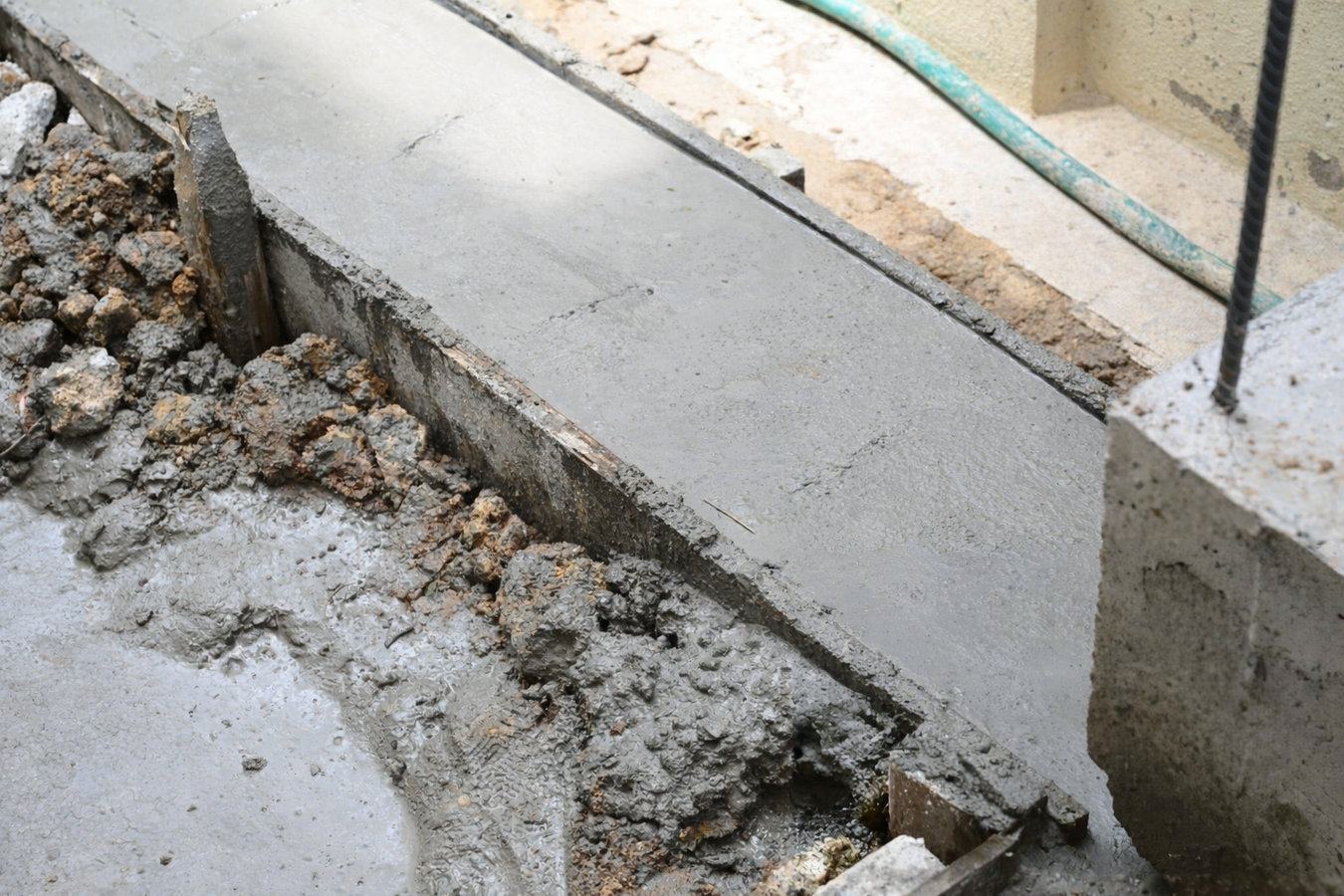
A sunken walkway, tilted garage floor, or settled patio can be lifted back to level without tearing out the old concrete - we assess the cause, restore the slope, and get it done in a day.
Foundation raising in Dedham, MA is the process of drilling small holes through a sunken concrete slab, pumping material underneath to fill voids and push the slab back to its original height, and patching the holes when finished - most residential jobs are completed in one day, often in just a few hours.
If you have a front walk that has settled toward your house, a garage floor with a crack where one side sits lower than the other, or a patio slab that has slowly tilted over the years, raising is often the faster and less expensive answer compared to full removal and replacement. The concrete does not have to be torn out - it just needs to be supported again. The key question is whether the slab itself is still structurally sound. If it is, lifting and stabilizing the soil underneath restores the surface and corrects the drainage slope at the same time. If you have a larger structural project in mind, our slab foundation building service covers new pours from the ground up.
When one section of your front walk sits noticeably higher or lower than the one next to it, that is a classic settling sign. In Dedham, this often appears after a hard winter when freeze-thaw cycles have pushed slabs out of alignment. A lip of even an inch is a serious trip hazard, especially for older family members or guests who are not expecting it.
When a slab tilts toward your house instead of away from it, rainwater and snowmelt run toward your foundation rather than away. In Dedham's wet springs, this can happen quietly - you may notice damp spots in a basement long before you look at the slab outside. If water is consistently pooling against your foundation, the slope of your concrete is likely part of the problem.
Garage floors in older Dedham homes are particularly prone to settling because they were often poured on fill soil with minimal preparation. If you notice a crack running across your garage floor with one side sitting lower than the other, that is a settling crack - not just a surface crack. Driving over that step repeatedly can damage your vehicle over time.
If you crouch down and look under the edge of a patio slab, stoop, or driveway apron and you can see daylight or feel a gap between the concrete and the soil, that void is exactly what causes slabs to crack and sink further. The soil has washed or compressed away, and the slab is now spanning empty space - a clear sign that raising is needed before the slab drops further.
We handle the full raising process: site assessment to confirm the slab is a good candidate, permit coordination with the Dedham Building Department when required, drilling, material injection, patching, and final walkthrough. We use both the traditional cement-slurry method and foam injection depending on your soil conditions and the size of the area - and we will explain which approach makes more sense for your specific situation before any work begins. If the assessment reveals that the slab is too far deteriorated to raise effectively, we will tell you that directly and point you toward concrete cutting and removal as a first step toward a proper replacement.
Drainage is almost always part of the conversation. A lifted slab that still drains toward your house will create the same problem again. We assess the surrounding grade as part of the job so that the result works long-term. If your project also involves a new base or footing work, our slab foundation building team can coordinate both scopes so you are not managing two separate contractors on the same job.
Best for homeowners with a sunken front walk or entry stoop creating a trip hazard - typically completed in a few hours with same-day return to use.
Best for older Dedham homes where the garage floor has cracked and settled unevenly, creating a lip that damages vehicles or makes the floor unsafe to park on.
Best for settled patio sections that have tilted away from their original plane - we lift and restabilize individual slabs without disturbing the surrounding area.
Best for the transition section between the street and your garage where settling creates a bump or gap - a common problem in Dedham's older neighborhoods with mature street trees.
Dedham sits in a climate zone where the ground freezes and thaws repeatedly from November through March - and that cycle is particularly hard on concrete. Every freeze pushes water into small cracks, widens them slightly, and can push slabs upward; every thaw lets the ground settle back unevenly. After decades of this, walkways separate, garage floors develop lips, and patio slabs tilt in directions they were never meant to go. A large share of Dedham's homes were built between the 1920s and 1960s on soils that were minimally compacted at the time, which means the ground has been slowly shifting under those foundations ever since. Homeowners in neighborhoods near the Charles River face the added factor of clay-heavy soil that holds water longer after rain or snowmelt, making soil saturation a recurring trigger for slab movement. We serve homeowners across Dedham and into nearby Westwood where similar soil and housing conditions create the same patterns.
Spring is the busiest season for foundation raising calls in Dedham - and the most important time to act. After a long winter, sunken slabs that were easy to step around become clear trip hazards and drainage problems. Contractors in the area book up quickly in April and May, so homeowners who notice problems in March should call for an estimate early rather than waiting until the issue gets worse. We also serve Norwood and the surrounding towns, where the same freeze-thaw conditions affect concrete in similar ways.
We ask where the problem is, roughly how large the area is, and whether you have noticed any water issues nearby. You do not need to know the technical details - just describe what you see and we will take it from there. Most calls get a response within one business day.
We come to your property, walk the area, and check for voids underneath the slab edge. We also look at nearby drainage and soil conditions, because those affect whether a lift will hold. After the visit, you get a written estimate that explains what we are recommending and why - not just a number.
If the work requires a permit from the Dedham Building Department - which is likely if it touches your structural foundation - we handle pulling that permit before scheduling the job. This step can add a few days to the timeline, but it protects you and keeps the work on record.
The crew drills small holes through the concrete, pumps material underneath to fill voids and lift the slab, then patches the holes and cleans up. You will be told exactly how long to stay off the surface. In the following days, walk the area and contact us if you notice any settling - we stand behind our work.
Free on-site estimates, no pressure. We will tell you honestly whether raising is the right fix - or if a different approach makes more sense.
We tell you upfront whether your slab is a good candidate for raising or whether replacement makes more sense for your situation. In Dedham's older housing stock, some slabs have simply been through too many winters to lift effectively - and we will say that rather than take your money for a job that will not hold.
Unpermitted foundation work is one of the most common issues that surfaces during a home sale in Massachusetts. We handle the permit process with the Dedham Building Department so the work is on record, inspected, and fully above board - protecting your investment if you ever decide to sell.
Lifting a slab that still drains toward your foundation solves one problem and creates another. We assess the surrounding grade during every job and make sure the finished surface slopes away from your home the way it should - reducing basement moisture risk and helping the lift last longer.
Massachusetts requires any contractor doing foundation or concrete work on a residential property to hold a Home Improvement Contractor registration. This registration gives you legal recourse through the state if something goes wrong. We carry it - and we carry both liability insurance and workers' compensation coverage on every job.
These are not just checkboxes - they are the things that determine whether a foundation raising job holds for years or needs to be redone. We combine honest site assessments, proper permits, and attention to drainage so you get a lasting result rather than a temporary patch.
When a slab is past raising, precise diamond-blade cutting removes the damaged section cleanly so replacement can start on a solid footing.
Learn MoreFull new slab pours for homes, garages, and additions - the right next step when a sunken slab cannot be lifted and needs to be replaced from scratch.
Learn MoreSpring slots fill fast - call now or send a message and we will get back to you within one business day.