Loading...
Serving Dedham, MA and surrounding areas. (781) 410-0722
Adding a garage, workshop, or ground-level addition? We build slab foundations with 48-inch frost footings, a compacted gravel base, and proper drainage - and we handle the Town of Dedham permit from start to finish.
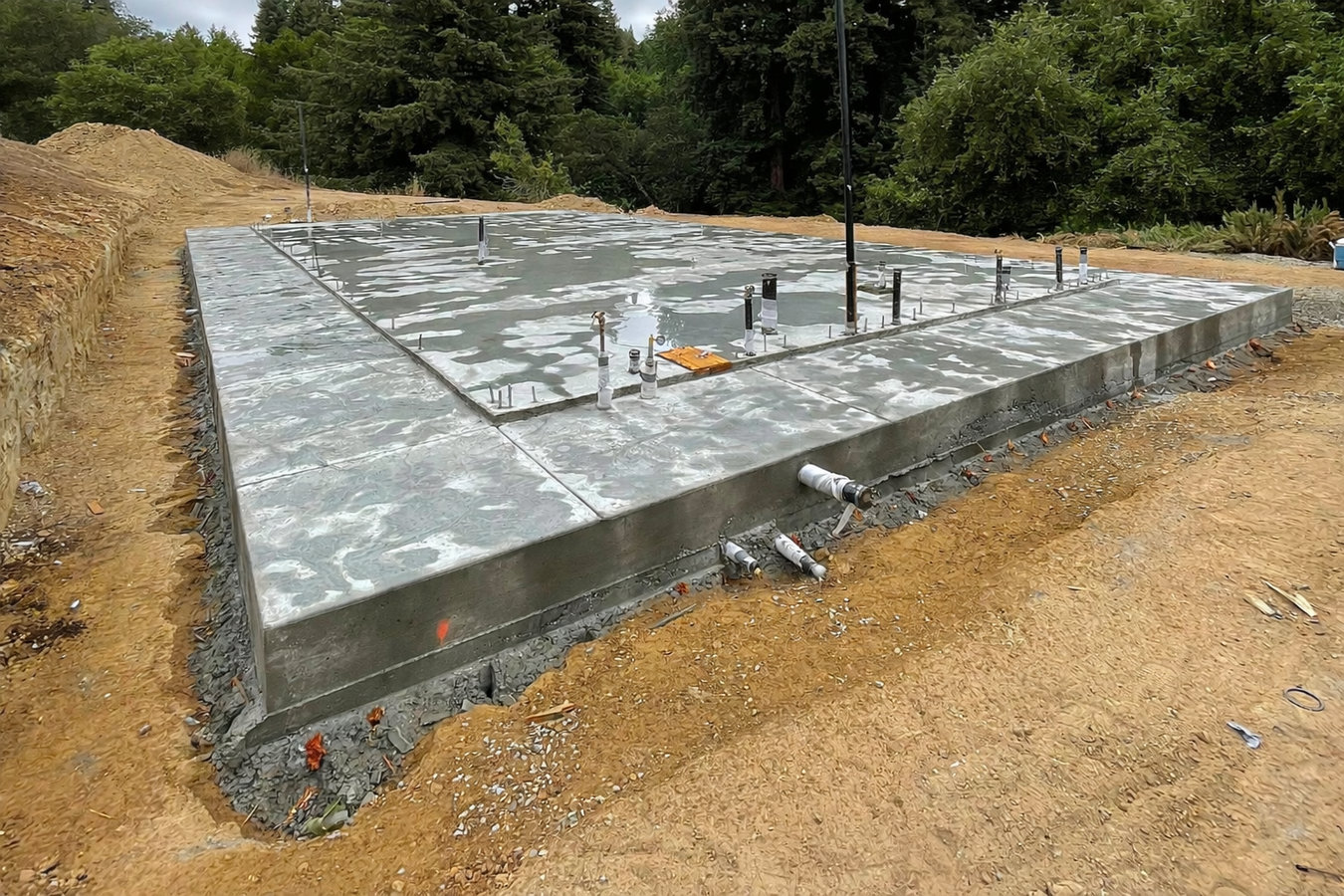
Slab foundation building in Dedham starts with site excavation and grading, a compacted gravel base, steel reinforcement, and a full pre-pour inspection from the Dedham Building Department. The pour itself is a single day. Most residential projects - a garage addition, a detached workshop, a ground-level sunroom - are complete and cured within two to four weeks from permit approval.
If you are adding a new structure to your Dedham property and the ground is currently bare, this is the starting point. Without a properly built foundation, any framing above it will shift, settle, and eventually cause problems with doors, walls, and floors. Many homeowners who also need steps or walkways leading up to the new structure find that our concrete steps construction work connects naturally to a new slab project.
Dedham's 48-inch frost line and clay-heavy soil in lower-lying neighborhoods near the Charles River make foundation depth and drainage the two decisions that separate a slab that lasts decades from one that starts cracking in year five. We get both right before anything is poured.
If you are adding a garage, sunroom, or ground-level addition to your Dedham home and the project area is currently unpaved or unbuilt, a new slab foundation is almost certainly part of what you need. Without a proper foundation, any structure built on bare ground will shift and settle unevenly, eventually causing problems with doors, windows, and walls above it.
Hairline cracks in concrete are normal and usually harmless, but cracks you can fit a pencil tip into - or cracks that run diagonally from corners - are a sign the slab has moved or settled unevenly. In Dedham, this is often connected to clay-heavy soils near the Charles River, which expand and contract with seasonal moisture changes. It is worth having a foundation contractor assess whether the slab can be repaired or needs replacement.
If water collects on your slab or seeps in from the edges after a heavy rain, the drainage around the foundation is not working correctly. Dedham's wet springs and proximity to the Charles River watershed make poor drainage a recurring issue in lower-lying neighborhoods. Standing water under or around a slab accelerates deterioration and can eventually compromise the structure above it.
If a floor tilts slightly underfoot, or doors in a garage or addition have started sticking or swinging open on their own, the slab may have shifted. New England's freeze-thaw cycles can gradually push a slab that was not built deep enough out of position. This is especially common in older Dedham structures where the original slab was poured before current frost-depth requirements were in place.
We handle new slab foundations for additions, garages, workshops, accessory structures, and detached buildings across Dedham and the surrounding towns. Every slab project includes full site preparation - excavation, grading, compacted gravel, vapor barrier, and steel reinforcement - before a single yard of concrete is poured. When your project also involves a full foundation wall system below grade, our foundation installation team handles that scope as a connected project.
For projects requiring footings under posts, columns, or structural points separate from the slab itself, we offer standalone concrete footings work that is often permitted and inspected alongside the main slab. We pull all required permits through the Town of Dedham Building Department and coordinate the pre-pour inspection so you do not have to manage any of that process yourself.
New detached or attached garage floors poured to the correct thickness for vehicle loads, with control joints and a broom finish for traction - suited to the most common Dedham addition project.
Slab-on-grade foundations for ground-level additions tied into an existing structure, with careful attention to drainage and elevation matching - the right choice for older Dedham homes adding living space.
New foundations for accessory dwelling units, storage structures, or sheds requiring a permitted base - including full permit handling and inspections through the Town of Dedham.
Demo and removal of a cracked or settling existing slab followed by a new pour with updated drainage and reinforcement - suited to Dedham homes built before current frost-depth requirements were standard.
Massachusetts requires foundation footings to extend below 48 inches - the depth at which the ground freezes in a hard Boston-area winter. That requirement is not a suggestion. A slab with a shallow perimeter footing will be pushed out of position by frost heave over time, cracking the concrete and misaligning anything built on top of it. Dedham's residential neighborhoods also include a significant number of homes built before 1960. When homeowners in these neighborhoods add a garage or addition on a slab, contractors need to carefully tie the new slab into the existing structure and account for differences in elevation and drainage - more involved than building a standalone slab on a fresh lot.
Parts of Dedham - particularly areas near the Charles River in East Dedham and Riverdale - sit on clay-heavy glacial soils that hold water rather than draining it. This puts consistent pressure on concrete from below and from the sides, and it is one of the most common reasons slabs crack prematurely in this region. We account for these conditions from the first site visit. Homeowners in Canton and Norwood face the same glacial soil conditions and the same frost-depth requirements, and we work in those towns regularly.
We schedule a free site visit within a few business days. We look at ground conditions, drainage, access, and any existing structure involved. You receive a clear, itemized written quote that covers excavation, materials, permit fees, and labor - no vague ballpark numbers.
We apply for the required building permit through the Town of Dedham Building Department. Plan review and approval typically takes one to two weeks. No excavation or concrete work begins until the permit is in hand - we will confirm this with you before the crew arrives.
The crew excavates, grades, lays the gravel base, installs any required plumbing or conduit, and places steel reinforcement. A Dedham building inspector then visits to verify everything meets code before the pour is scheduled - this inspection step is required and protects you as the homeowner.
The pour typically takes a single day. Finishers level, smooth, and cut control joints into the surface. The slab needs about one week to support construction activity and about one month to reach full strength. A final permit inspection closes out the paperwork - keep that document for when you sell the home.
No pressure - just a free site visit, a written estimate, and honest answers about what your project involves.
Every slab foundation we build in Dedham includes a perimeter footing set below the 48-inch Massachusetts frost line - not as an upgrade, but as the standard. A footing built above that depth will be pushed out of position by frost heave, and that is a failure mode we will not build into your project.
We pull the required building permit through the Town of Dedham Building Department and coordinate the pre-pour inspection. When the job is done, you receive documentation confirming the work passed inspection. That paperwork matters when you sell - buyers and their attorneys will ask for it. Town of Dedham Building Department
Dedham's clay-heavy soils and wet spring seasons mean drainage is not optional - it is part of every slab design we deliver. The gravel base depth, vapor barrier placement, and site grading are all designed for Dedham's specific conditions, not a generic regional standard. Charles River Watershed Association
Vague estimates that grow after work starts are one of the most common homeowner complaints in the trades. Every quote we issue breaks down excavation, materials, permit fees, and labor separately so you can compare contractors accurately and know exactly what you are agreeing to before any work begins.
A slab foundation is invisible once it is done, which is exactly why the decisions made before the pour matter so much. We build the foundation right the first time so you are not dealing with cracks, shifts, or drainage problems in year three.
Full poured concrete foundation walls for homes and additions, including waterproofing, drainage, and permit coordination.
Learn MoreStandalone concrete footings for posts, columns, and structural points that often pair with a new slab project.
Learn MoreSpring and summer slots fill fast - reach out now to lock in your start date before the busy season closes out.