
Loading...
Serving Dedham, MA and surrounding areas. (781) 410-0722
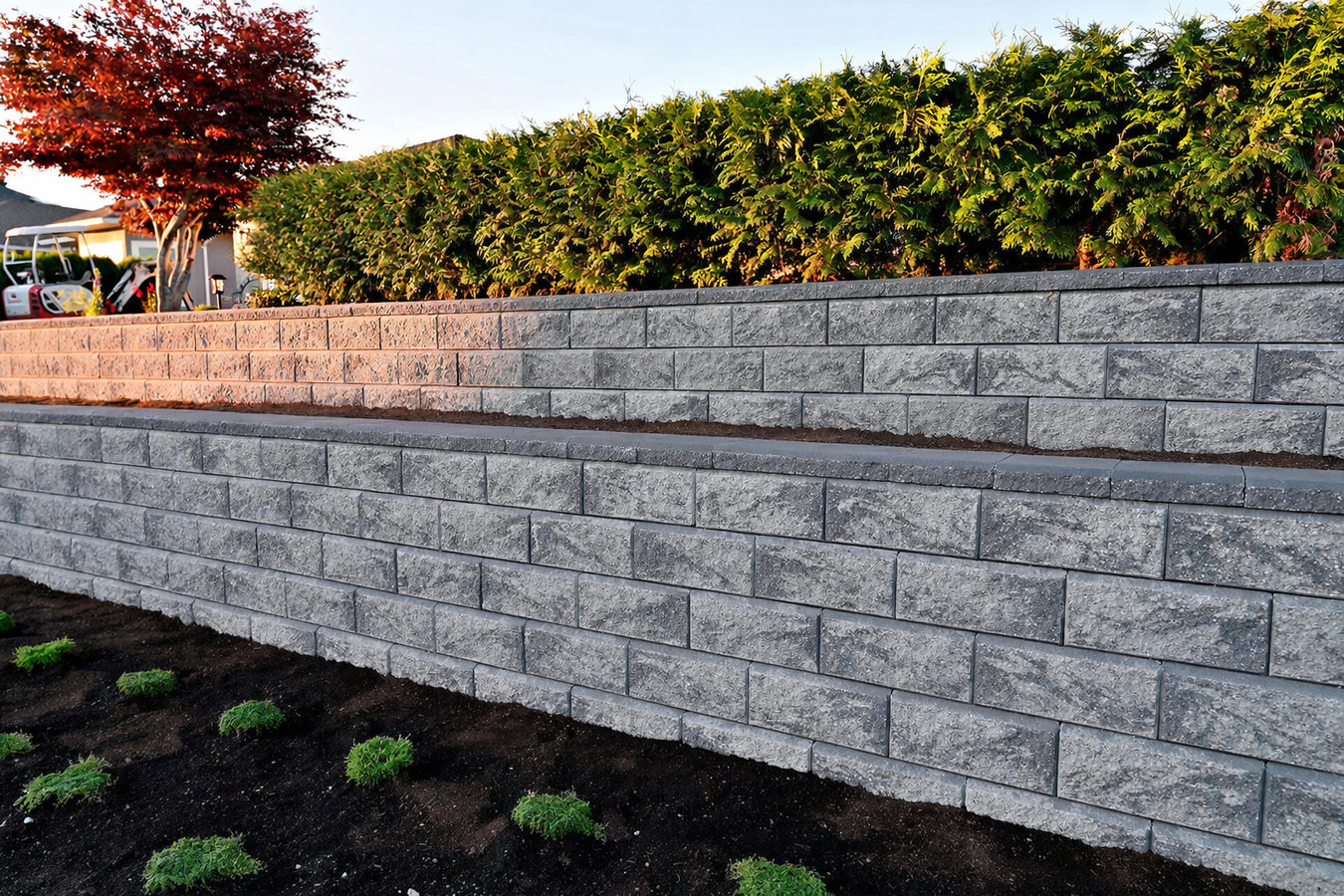
Your slope is losing ground every season. We build retaining walls set below the 48-inch frost line, with drainage that handles Dedham's clay soil, so the wall stays straight for decades.
Concrete retaining walls in Dedham hold back soil on slopes and hillsides, protect foundations from erosion, and turn problem grades into flat usable space. Most residential projects - a terraced backyard, a sloped driveway edge, a hillside garden bed - are completed within one to two weeks depending on length and height.
If you have a slope that loses soil every time it rains, or an existing wall that leans more each winter, you already know the problem. Concrete retaining walls in Dedham outlast wood, brick, and railroad ties by decades when they are built with the right foundation depth and drainage. If you are also dealing with surface erosion on walkways or steps, our concrete steps construction work often pairs well with a new wall.
Dedham's clay soil and 48-inch frost line make drainage and footing depth the two most important decisions on any wall project here. We get both right before we pour a single yard of concrete.
Stand at one end of the wall and look down its length. Any lean, curve, or bulge in the middle means the wall is losing the battle against the soil behind it. In Dedham's clay-heavy ground, this process accelerates once it starts - a wall that leans a little this spring may lean a lot by next fall.
After a heavy rainstorm, check the base of your wall. If soil is washing out from behind it, or debris is collecting at the base, the wall is no longer doing its job. This is especially common with older timber or stone walls in Dedham neighborhoods that have lost their drainage capacity over the decades.
Small hairline cracks in older concrete are normal, but wide cracks - anything you can fit a finger into - or diagonal cracks running corner to corner signal structural movement. These do not repair themselves, and they grow faster once freeze-thaw cycles work into them each winter.
If rainwater collects against your house rather than draining away, a failing slope may be directing it there. A retaining wall combined with proper grading can redirect that water away from your foundation - protecting one of the most expensive parts of your home from slow, hard-to-spot damage.
We handle the full range of residential retaining wall projects in Dedham - from replacing a failing timber wall with poured concrete, to installing a block retaining wall on a tight lot, to building a new terraced system on a steep backyard slope. Every wall we build includes deep frost footings, gravel backfill, and a drainage pipe behind the wall. If you need additional work around the same area, our concrete floor installation team handles basement and garage slabs that often tie into wall projects on older Dedham properties.
For properties with access challenges, grades that require multiple terraces, or sites near the Charles River where soil moisture is elevated, we adjust our drainage and foundation approach before work begins. We also handle all permitting with Dedham's Inspectional Services Department so you do not have to make a single call to the town.
Formed and cast on-site for maximum strength - best for taller walls, tight sites, or homeowners who want a seamless, solid finished look.
Interlocking blocks stacked in a pattern - good for homeowners who want a textured or layered appearance, or for projects with curved layouts.
Two or three shorter walls stacked in steps - the right choice for steep slopes where a single tall wall would require engineering review or extensive permitting.
Demo and removal of old timber, stone, or concrete walls followed by a new concrete build - suited to homes from the 1920s-1960s era common in Dedham neighborhoods.
Dedham has one of the deepest frost lines in the contiguous United States - roughly 48 inches. Any retaining wall built here needs its footing dug well below that depth, or the ground will heave and shift every winter, pushing the wall out of alignment. This is not optional - it is what keeps a wall standing straight after ten New England winters. Dedham's residential neighborhoods also include a large number of homes built between the 1920s and 1960s. Many of these properties have original stone, brick, or timber retaining walls that are now at or past the end of their useful life. If your home is in that age range and has a terraced yard or sloped driveway, there is a real chance the existing wall is already failing quietly.
Much of eastern Massachusetts, including Dedham, sits on glacially deposited clay-heavy soils that hold water rather than draining it. This means more hydrostatic pressure builds up behind a retaining wall after rain or snowmelt. We use more aggressive drainage measures - more gravel, better pipe placement - to compensate. Homeowners in Westwood and Canton face the same soil and frost conditions, and we build walls in both towns using the same deep-footing, full-drainage approach.
We walk your property in person before giving you any numbers. We look at the slope, the existing wall if there is one, and how equipment can access the site. You get a written estimate that breaks down every line item - no ballparks over the phone. We reply within one business day of your inquiry.
For most retaining walls in Dedham, we apply for the building permit through the town's Inspectional Services Department. This typically takes one to two weeks to process. You do not need to make a single phone call to the town - we handle all the paperwork.
The crew excavates the base below the frost line - deep digging is required in Massachusetts. Behind the wall, we install gravel and drainage pipe before any backfilling. This drainage layer is invisible once the job is done, but it is what separates a wall that lasts from one that leans within five years.
After the concrete cures - at least a week - we backfill with compacted soil and clean up the site. Because a permit was pulled, a town inspector will schedule a visit. We coordinate this. Once it passes, you have a record on file with the town, which is useful when you sell your home.
Free written estimate. No obligation. We reply within one business day.
We set every footing below the 48-inch Massachusetts frost line, without exception. That standard is the single most important factor in whether a retaining wall survives New England winters intact, and it is non-negotiable on every job we take.
Dedham's glacially deposited clay soil holds water longer than sandy or gravelly ground, which means more hydrostatic pressure builds up behind a wall after rain. We install more gravel and better pipe placement than the minimum - because local soil conditions demand it.
We pull every required permit through Dedham's Inspectional Services Department and coordinate the final inspection. When the job is done, there is a clean permit record on file - which matters when a buyer's inspector looks at your home during a future sale. American Concrete Institute standards guide our material and curing practices on every project.
Every estimate spells out excavation, drainage, materials, and permit fees line by line. Dedham homeowners tell us that getting a quote that does not change mid-project is one of the things they valued most about working with us.
We have built retaining walls across Dedham and Norfolk County - from the older neighborhoods near Dedham Square to properties along the Charles River where soil moisture runs high. That local experience is what shapes how we design drainage and set foundations on every job.
New basement and garage slabs built with moisture barriers and proper subgrade prep - often paired with retaining wall projects on older Dedham properties.
Learn MoreSteps integrated into a retaining wall or hillside grade, built to match the same frost-footing depth standard as the wall itself.
Learn MoreSpring slots fill fast once the ground thaws - reach out now to lock in your project date and get a free written estimate.